Meet your Macronutrients
These are nutrients that the body needs in large quantities. Below are the most nutrient dense sources for protein, fats and carbohydrates. This means that you should get your macronutrients from these sources first. Doing so will prevent micronutrient (nutrients that your body needs in small quantities) deficiencies. For example, if you get all your carbohydrates from white bread instead of vegetables, you'll miss out on a lot of vitamins and minerals. These vitamins and minerals will help all of your systems functions properly.
Protein:
Proteins contain amino acids which are lost from the body each day. Essential amino acids cannot be made by the body and must be consumed. Animal sources have the highest amount of essential amino acids per unit of food. Protein can absolutely be acquired from plant sources, especially if the sources are varied.
- Lean meat (beef, chicken, turkey)
- Fish (tuna, salmon, bass)
- Eggs
- Dairy (greek yogurt, cottage cheese)
- Vegetarian options (peas, legumes, tofu, tempeh)
- Protein Supplements (based with: whey, casein, hemp, pea)
Fats:
You need a third each of polyunsaturated, monounsaturated and saturated fats in your diet. Getting this ratio out of balance can cause problems. Since saturated fats are most abundant in the western diet, they are most likely to skew this balance. Saturated fats aren't bad by themselves, they are crucial for the body, for hormone regulation and a myriad of other reactions. Do not limit saturated fats, simply keep them in check with your other fats.
- Saturated (animal fats, coconut and palm oil)
- Polyunsaturated (macadamias, pecans, cashews, almonds, pistachios, sesame seeds, pumpkin seeds, hazelnuts, olive/oil)
- Monounsaturated (fish oil, hemp seed, algae, flax seed, sunflower seeds, safflower oil, canola, soy, walnuts, chia seeds, Brazil nuts)
Carbohydrates:
Most of your carbohydrates should come from vegetables, yes, vegetables are carbohydrates. Vegetables (and some fruits) are high in fiber and micronutrients, making them satiating and nutritious. Next, look to minimally, processed starchy carbohydrates. Only eat sugary, processed sugars sparingly if you are an athlete or trying to gain weight.
- Vegetables (spinach, broccoli, cauliflower, brussel sprouts, cabbage, kale, carrots)
- Fruits (tomatoes, oranges, berries, apples)
- Starchy, minimally processed (Potatoes, oats, quinoa, rice, amaranth, buckwheat)
- Sugary, processed (sports drinks, juice, sugar, desserts, bagels, muffins, some cereals)
Fist Palm
Now that you understand what macronutrients are, you must understand what a serving size of each looks like. You can use your hand to determine portion sizes at each meal. Let's assume you're eating 4 meals a day. Each meal should look something like this:
*Plant based people, please, imagine that protein photo is a plant based protein of your choice*
*Plant based people, please, imagine that protein photo is a plant based protein of your choice*

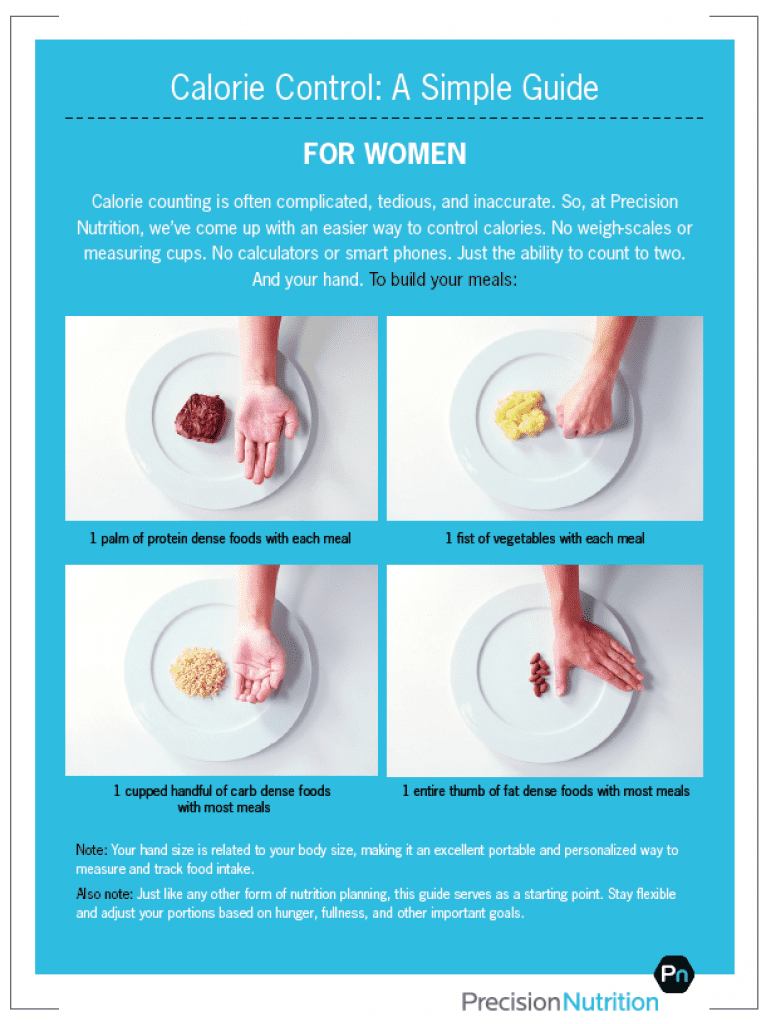 |
| image copyright Precision Nutrition |
Your body type and goals will determine how much you vary portion sizes and quantities of each type of food. If you have difficulty staying lean, you may want to cut back on your starchy carbohydrates (because of the insulin reaction they trigger) and fats (because they are most calorie dense). Conversely, if you have difficulty gaining mass, up your starchy carbohydrates and fats by 1/2 a serving. Here is another fantastic infographic from Precision Nutrition:

Almost ready for take-off
At this point you should understand:
- What a macronutrient is
- The most nutrient dense food sources for each macronutrient
- What a portion size of food from each macronutrient category should look like
- How to tailor portion sizes and macronutrient ratios for your goals and body type
What time is it?
It's nutrient timing time! There are many theories and practices in the world of workout nutrition. Overall, it is more important what you eat in a day than when you eat it. If you get in all your nutrients and monitor your portions each day, your workouts and goals will thrive.
Macronutrients trigger certain hormonal and systematic reactions that can have a positive effect on your training. My recommendations on when you consume certain macronutrients are based upon these (extremely over-simplified) reactions:
- Protein: contains essential amino acids which are the building blocks needed to repair and grow muscle. After muscle damage (exercise) the body will look for building blocks to begin its repair and re-growth. Your body doesn't 'want' you to have more muscle (and less fat) unless conditions are ideal and building blocks are in abundance. Protein also triggers a series of hormonal reactions which are associated with muscle growth and muscle sparing.
- Fat: slows down the entry rate of sugars into the bloodstream, triggers hormones to signal fullness and control inflammation.
- Carbohydrates: trigger insulin, the most anabolic (growth promoting) hormone in the body. Carbohydrates send messages to cells to 'open up' and get ready to accept and store nutrients.
I have created a chart based off these reactions and qualities:

As you can see, many recommendations are the same or similar across different body types and goals. The main principles carried through are:
- Eat the highest amount of carbohydrates after or during your workout. This will trigger an insulin response which will open your cells to the incoming protein, which you should also be consuming.
- Eat fats and protein before your workout if you fat loss or body composition maintenance is a goal. This will trigger your body to burn fats in your workout. You don't want to 'top off' glycogen (carbohydrate) stores because your body will burn through those before it burns fat.
- Supplement with amino acid or BCAA drinks if protein is not abundant. These will supply your body with the building blocks it needs without making you feel overly full during your workout. I like the product Amino Boost by Dotfit.
- Drinks that are a 2:1 carbohydrate to protein ratio may be consumed to improve sports performance and muscle gain. An example of this would be protein powder and dextrose or protein and a small piece of fruit.
- Drinks that are 2:1 protein to carbohydrate may be consumed if fat loss or muscle sparing is a goal.
- Do what you practice. If you like to workout on a full or empty stomach, do what works for you. As long as you eat 1-2 hours before and after your workout, your body will get the nutrients that it needs.
Bait
Okay, I lured you into this post. I dangled the delicious carrot (cake) of nutrient timing in front of you only to lead you down a long path of plain ole' nutrients. I did this in your best interest. Nutrient timing is a highly debated subject. Some would flat-out disagree with my recommendations, and they'd be semi-right. This is because if something works, it works. These are the recommendations that make sense for me and have worked for my clients. These guidelines work for my clients because prior to discussing them, I teach my clients about macronutrients and portions, just like I did here. I believe that nutrient timing works for people who have to educate themselves about nutrition in order to apply its principles.
If you apply the information in the beginning of this post, it will really change how you look and feel. The nutrient timing information at the bottom is just icing on the cake (if you're going to have a piece, do so after you workout).
